More from the "Dance Through Time" series, this time, focusing on the most popular dances done during the Victorian Era... I'm still hoping to learn some of them eventually 🤞🏼
In case you missed the news: "The Buccaneers" season two is now streaming on Apple TV, while the trailer for season four of "The Gilded Age" was just released, and, of course, I can't wait to see what the new season of TGA has in store...
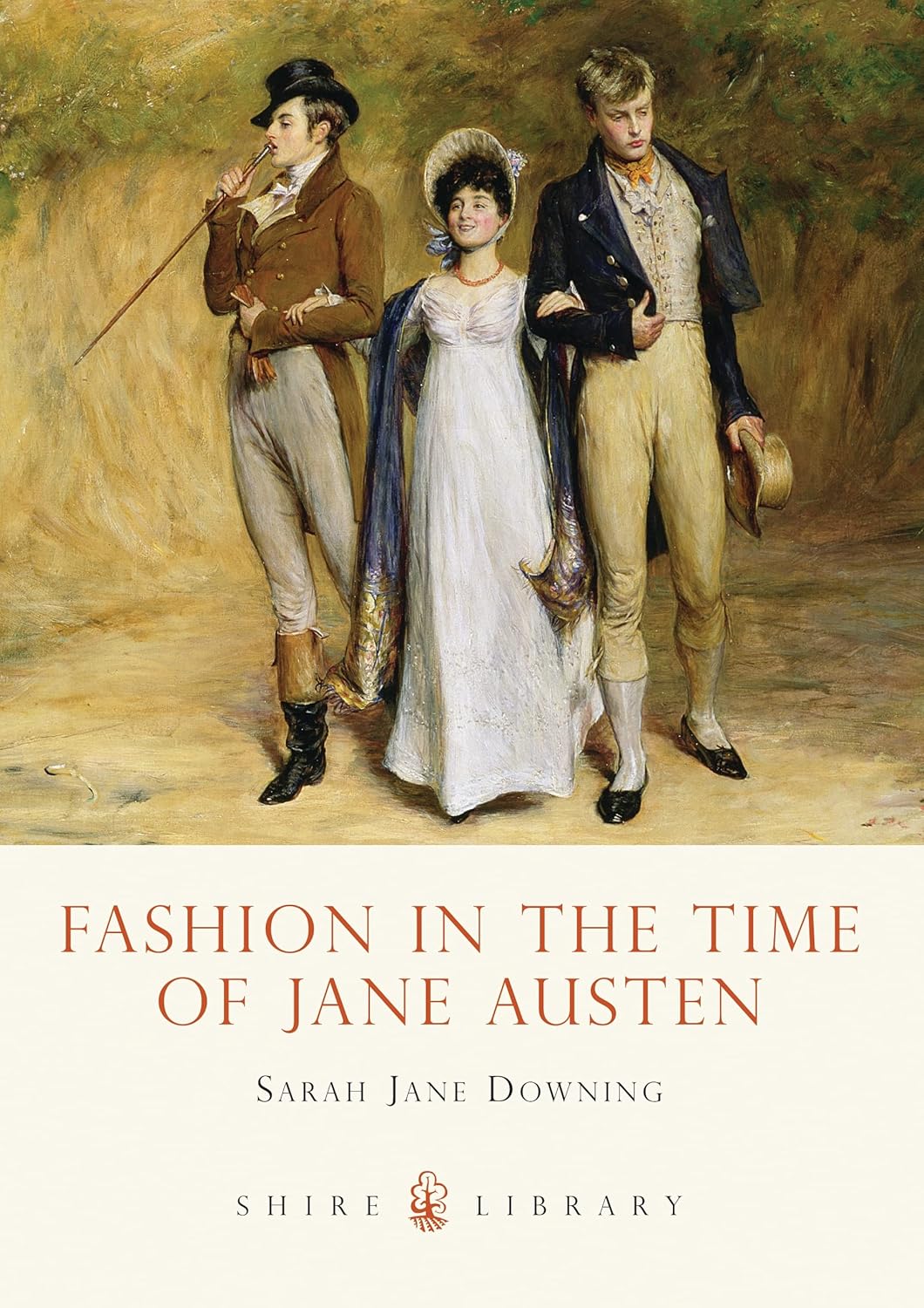
2026 continues to be the year of Austen as two more adaptations are set to come our way in the next few months, one in theaters, the other via Netflix...as a historical fashion enthusiast, and the backlash against the Netflix version of "Persuasion", I'm a bit anxious about how these versions will turn out, but we will soon see...
In case you missed it, Netflix has redone the classic series based on the classic novel by Laura Ingalls Wilder and I actually really enjoyed it... it's got a nice blend of heart and darkness with nothing feeling overdone...if you're a fan of the story, I recommend having a look!
A few months ago, the BBC released The Other Bennet Sister based on the best selling novel by Janice Hadlow to much race reviews...now the series is also streaming on Brit Box, and I'm very much enjoying it. Do check it out if you get the chance and you're an Austen fanatic!
Trailer
Mary, the bookish ugly duckling of Pride and Prejudice’s five Bennet sisters, emerges from the shadows and transforms into a desired woman with choices of her own.
What if Mary Bennet’s life took a different path from that laid out for her in Pride and Prejudice? What if the frustrated intellectual of the Bennet family, the marginalized middle daughter, the plain girl who takes refuge in her books, eventually found the fulfillment enjoyed by her prettier, more confident sisters? This is the plot of Janice Hadlow's The Other Bennet Sister, a debut novel with exactly the affection and authority to satisfy Jane Austen fans. Ultimately, Mary’s journey is like that taken by every Austen heroine. She learns that she can only expect joy when she has accepted who she really is. She must throw off the false expectations and wrong ideas that have combined to obscure her true nature and prevented her from what makes her happy. Only when she undergoes this evolution does she have a chance at finding fulfillment; only then does she have the clarity to recognize her partner when he presents himself—and only at that moment is she genuinely worthy of love. Mary’s destiny diverges from that of her sisters. It does not involve broad acres or landed gentry. But it does include a man; and, as in all Austen novels, Mary must decide whether he is the truly the one for her. In The Other Bennet Sister, Mary is a fully rounded character—complex, conflicted, and often uncertain; but also vulnerable, supremely sympathetic, and ultimately the protagonist of an uncommonly satisfying debut novel.
With the recent release of the latest (and some might say controversial) adaptation of Wuthering Heights, History Tea Time delved into the story of the legendary Bronte sisters:
Recall the line "there'll be scary ghost stories" in that old holiday chestnut "It's the Mosto Wonderful Time of the Year"? Well, as I'm sure many of us know, that was a fact back in the Victorian era, as a tradition during Christmas was to gather around a fire and do just that... fortunately for us, many of stories still exist and you can find them in the books over found below, should you wish to Cary on the tradition yourself every season:
Move over, Charles Dickens! The author of "A Christmas Carol" may be the most famous Victorian author of Christmas ghost stories, but the king of the genre was James Skipp Borlase (1839-1909), who published dozens of them in obscure British and Australian periodicals during a nearly fifty-year span. Now for the first time, thirteen of Borlase's best tales have been unearthed from newspaper archives and compiled in a single volume for modern readers.
In "A Weird Wooing" (1898) an impecunious suitor braves a house haunted by the ghosts of plague victims in search of a legendary treasure. "The Steel-Bound Valise" (1875) tells of a horrid murder and a spectral vision that reveals the truth behind the awful deed. In "A Bride from the Dead" (1899), a man races against time on horseback to save his beloved from a forced marriage-but arrives too late to prevent an even more horrible and macabre fate. This volume showcases Borlase's wide range, featuring macabre and bone-chilling stories alongside more lighthearted pieces, all of them just as entertaining to read on a winter's night as they were more than a century ago.
The Winter Solstice. Yule. Christmas. The Holiday season has always hid horror beneath the holly and shadows behind the merriment. Long before Christianity, Christmas Eve was a night of Pagan mystery, when humanity prayed for the sun’s return, and spirits wandered snowy midnight lanes. The Victorians popularized the tradition of telling ghost stories at this festive time of year, savoring tales of specters and otherworldly beings amidst the warmth of Holiday joy. Editor William P. Simmons invites readers to continue this shivery tradition with a collection of the genre’s most terrifying Christmas stories. See why the Holiday season is the most frightening time of the year with 20 rare and classic supernatural stories collected from various sources, featuring a diverse array of authors, some well-known, others unjustly forgotten. This is the dark gift you’ve been waiting for--a fearful feast of Yule stories that merge the Christmas traditions of years past with timeless nightmares…and visitations that could happen to you. Bone-chilling classics from Charles Dickens, Sir Walter Scott, J.S. Le Fanu, and M.R. James appear alongside rare terror tales from forgotten authors who make their first appearance here in decades, including James Hain Friswell, F. Frankfurt Moore, Ernest R. Suffling, Dick Donovan, Bernard Capes, and Grant Allen. Christmas wouldn’t be complete without a visit from the genre’s Macabre Mistresses. Mary E. Braddon, Charlotte Riddell, Elizabeth Gaskill, and Louisa Baldwin fill your stockings with tales of dread and dismay for the merriest time of the year. Spend this Christmas with graveyard visitants and fearsome night creatures from legend and lore. Celebrate with a spectral spectacle of goblins and sprites, family curses and pagan sacrifices, doomed houses and haunted minds. Wraiths, psychopomps, demons, and the Devil himself appear to share a cup of cheer…and make you look uneasily into the shadows.
This Book of Victorian Christmas Stories Includes Stories from: THE KIT-BAG - Algernon Blackwood BETWEEN THE LIGHTS- E.F. Benson THE DEAD - James Joyce THE OLD NURSES STORY - Elizabeth Gaskell "OH, WHISTLE, AND I'LL COME TO YOU, MY LAD" - M. R. JAMES THE SIGNAL-MAN - Charles Dickens THE SEARCHER OF THE END HOUSE - William Hope Hodgson THE EYES - Edith Wharton CHRISTMAS EVE ON A HAUNTED HULK - Frank Cowper THEY - Rudyard Kipling A DEAD MAN’S FACE - Hugh Conway THE SCREAMING SKULL - F. Marion Crawford A STRANGE CHRISTMAS GAME - Charlotte Riddell
During the Victorian era, it became traditional for publishers of newspapers and magazines to print ghost stories during the Christmas season for chilling winter reading by the fireside or candlelight. Now for the first time thirteen of these tales are collected here, including a wide range of stories from a diverse group of authors, some well-known, others anonymous or forgotten. Readers whose only previous experience with Victorian Christmas ghost stories has been Charles Dickens's "A Christmas Carol" will be surprised and delighted at the astonishing variety of ghostly tales in this Volume.
Following the popularity of Charles Dickens’s A Christmas Carol(1843), Victorian newspapers and magazines frequently featured ghost stories at Christmas time, and reading them by candlelight or the fireside became an annual tradition. This second volume of Victorian Christmas ghost stories contains fifteen tales, most of which have never been reprinted. They represent a mix of the diverse styles and themes common to Victorian ghost fiction and include works by once-popular authors like Grant Allen and Eliza Lynn Linton as well as contributions from anonymous or wholly forgotten writers. This volume also features a new introduction by Prof. Allen Grove.
Seeking to capitalize on the success of Charles Dickens’s A Christmas Carol (1843), Victorian newspapers and magazines frequently featured ghost stories at Christmas time, and reading them by candlelight or the fireside became an annual tradition, a tradition Valancourt Books is pleased to continue with our series of Victorian Christmas ghost stories. This third volume contains twenty tales, most of them never before reprinted. They represent a mix of the diverse styles and themes common to Victorian ghost fiction and include works by once-popular authors like Ellen Wood and Charlotte Riddell as well as contributions from anonymous or wholly forgotten writers. This volume also features a new introduction by Prof. Simon Stern.
The Christmas ghost story tradition is usually associated with Charles Dickens and Victorian England, but—apparently unknown to historians and scholars—Christmas ghost stories were extremely widespread and popular in 19th-century America as well, frequently appearing in newspapers and magazines during the holiday season.
From legends of old New Orleans and strange happenings on the plains of Iowa and the Dakota Territory to weird doings in early Puerto Rico and ghostly events in Gold Rush-era San Francisco, the tales collected here reveal a forgotten Christmas ghost story tradition in a bygone America that is both familiar and oddly foreign. This collection features eighteen stories and nine poems, including entries by women and African American writers, plus extra bonus material and an introduction by Christopher Philippo.
For this fifth Valancourt volume of Christmas ghost stories, editor Christopher Philippo has dug deeper than ever before, delving into the archives of Victorian-era newspapers and magazines from throughout the British Isles to find twenty-one rare texts for the Christmas season - seventeen stories and four poems - most of them never before reprinted.
Featured here are gems by once-popular but now-forgotten 19th-century masters of the supernatural like Amelia Edwards, Barry Pain, and Florence Marryat, alongside contributions by totally obscure authors like James Skipp Borlase, a writer of penny dreadfuls who specialized in lurid Christmas horror stories, and Harry Grattan, who made history by writing the first ghost story recorded by Edison for the phonograph. Also included are an introduction and bonus materials, such as 19th-century news articles and advertisements related to Christmas ghosts.
Have you ever recognized Mrs. Elton in an office colleague? Or caught a glimpse of Lady Catherine de Bourgh in the neighborhood crank? Have you spotted a young Emma Woodhouse in your teenage daughter's clique? Over two hundred years after their creation, Jane Austen's mean girls are still alive and kicking. Bitches in Bonnets explores parallels between Austen's world and our own, showing how modern social and behavioral scientists are just beginning to document and quantify what the author knew instinctively. Interweaving modern research and sociological experiments, author and Austen scholar Sarah Makowski looks beyond Austen's texts for the sources of female aggression both during the Regency and today. Despite incredible advances in gender equality, women still face discrimination and bullying from creche to career. The cruelest assaults are those that are least expected – from other women. Hardly a woman alive has not experienced a false friend whose opinions and affection bring both positive and destructive consequences. The very ordinariness of Austen's stories leaves room for us to identify with her flawed heroines and make peace with their enemies. Bitches in Bonnets examines how six novels of quiet English life, penned by a parochial Regency spinster, still provide insight on female relationships after all these years and how Austen’s writing – and our reading of it – offers solace to millions of fans worldwide.
Historidame is back with another Regency era spotlight, this time on beauty standards and one I forgot before on the era's debutantes and "the season":