Showing posts with label Book Reviews. Show all posts

Wednesday, May 13, 2026

"The Other Bennet Sister"

A few months ago, the BBC released The Other Bennet Sister based on the best selling novel by Janice Hadlow to much race reviews...now the series is also streaming on Brit Box, and I'm very much enjoying it. Do check it out if you get the chance and you're an Austen fanatic!

Trailer 


Mary, the bookish ugly duckling of Pride and Prejudice’s five Bennet sisters, emerges from the shadows and transforms into a desired woman with choices of her own.

What if Mary Bennet’s life took a different path from that laid out for her in Pride and Prejudice? What if the frustrated intellectual of the Bennet family, the marginalized middle daughter, the plain girl who takes refuge in her books, eventually found the fulfillment enjoyed by her prettier, more confident sisters? This is the plot of Janice Hadlow's The Other Bennet Sister, a debut novel with exactly the affection and authority to satisfy Jane Austen fans.
Ultimately, Mary’s journey is like that taken by every Austen heroine. She learns that she can only expect joy when she has accepted who she really is. She must throw off the false expectations and wrong ideas that have combined to obscure her true nature and prevented her from what makes her happy. Only when she undergoes this evolution does she have a chance at finding fulfillment; only then does she have the clarity to recognize her partner when he presents himself—and only at that moment is she genuinely worthy of love.
Mary’s destiny diverges from that of her sisters. It does not involve broad acres or landed gentry. But it does include a man; and, as in all Austen novels, Mary must decide whether he is the truly the one for her. In
The Other Bennet Sister, Mary is a fully rounded character—complex, conflicted, and often uncertain; but also vulnerable, supremely sympathetic, and ultimately the protagonist of an uncommonly satisfying debut novel.

Thursday, December 18, 2025

Victorian Christmas books

Recall the line "there'll be scary ghost stories" in that old holiday chestnut "It's the Mosto Wonderful Time of the Year"? Well, as I'm sure many of us know, that was a fact back in the Victorian era, as a tradition during Christmas was to gather around a fire and do just that... fortunately for us, many of stories still exist and you can find them in the books over found below, should you wish to Cary on the tradition yourself every season:

Move over, Charles Dickens! The author of "A Christmas Carol" may be the most famous Victorian author of Christmas ghost stories, but the king of the genre was James Skipp Borlase (1839-1909), who published dozens of them in obscure British and Australian periodicals during a nearly fifty-year span. Now for the first time, thirteen of Borlase's best tales have been unearthed from newspaper archives and compiled in a single volume for modern readers.
In "A Weird Wooing" (1898) an impecunious suitor braves a house haunted by the ghosts of plague victims in search of a legendary treasure. "The Steel-Bound Valise" (1875) tells of a horrid murder and a spectral vision that reveals the truth behind the awful deed. In "A Bride from the Dead" (1899), a man races against time on horseback to save his beloved from a forced marriage-but arrives too late to prevent an even more horrible and macabre fate. This volume showcases Borlase's wide range, featuring macabre and bone-chilling stories alongside more lighthearted pieces, all of them just as entertaining to read on a winter's night as they were more than a century ago.

The Winter Solstice. Yule. Christmas. The Holiday season has always hid horror beneath the holly and shadows behind the merriment. Long before Christianity, Christmas Eve was a night of Pagan mystery, when humanity prayed for the sun’s return, and spirits wandered snowy midnight lanes.
The Victorians popularized the tradition of telling ghost stories at this festive time of year, savoring tales of specters and otherworldly beings amidst the warmth of Holiday joy.
Editor William P. Simmons invites readers to continue this shivery tradition with a collection of the genre’s most terrifying Christmas stories.
See why the Holiday season is the most frightening time of the year with 20 rare and classic supernatural stories collected from various sources, featuring a diverse array of authors, some well-known, others unjustly forgotten.
This is the dark gift you’ve been waiting for--a fearful feast of Yule stories that merge the Christmas traditions of years past with timeless nightmares…and visitations that could happen to you.
Bone-chilling classics from Charles Dickens, Sir Walter Scott, J.S. Le Fanu, and M.R. James appear alongside rare terror tales from forgotten authors who make their first appearance here in decades, including James Hain Friswell, F. Frankfurt Moore, Ernest R. Suffling, Dick Donovan, Bernard Capes, and Grant Allen. Christmas wouldn’t be complete without a visit from the genre’s Macabre Mistresses. Mary E. Braddon, Charlotte Riddell, Elizabeth Gaskill, and Louisa Baldwin fill your stockings with tales of dread and dismay for the merriest time of the year.
Spend this Christmas with graveyard visitants and fearsome night creatures from legend and lore. Celebrate with a spectral spectacle of goblins and sprites, family curses and pagan sacrifices, doomed houses and haunted minds. Wraiths, psychopomps, demons, and the Devil himself appear to share a cup of cheer…and make you look uneasily into the shadows.


This Book of Victorian Christmas Stories Includes Stories from:
THE KIT-BAG - Algernon Blackwood
BETWEEN THE LIGHTS- E.F. Benson
THE DEAD - James Joyce
THE OLD NURSES STORY - Elizabeth Gaskell
"OH, WHISTLE, AND I'LL COME TO YOU, MY LAD" - M. R. JAMES
THE SIGNAL-MAN - Charles Dickens
THE SEARCHER OF THE END HOUSE - William Hope Hodgson
THE EYES - Edith Wharton
CHRISTMAS EVE ON A HAUNTED HULK - Frank Cowper
THEY - Rudyard Kipling
A DEAD MAN’S FACE - Hugh Conway
THE SCREAMING SKULL - F. Marion Crawford
A STRANGE CHRISTMAS GAME - Charlotte Riddell


During the Victorian era, it became traditional for publishers of newspapers and magazines to print ghost stories during the Christmas season for chilling winter reading by the fireside or candlelight. Now for the first time thirteen of these tales are collected here, including a wide range of stories from a diverse group of authors, some well-known, others anonymous or forgotten. Readers whose only previous experience with Victorian Christmas ghost stories has been Charles Dickens's "A Christmas Carol" will be surprised and delighted at the astonishing variety of ghostly tales in this Volume.

Following the popularity of Charles Dickens’s A Christmas Carol(1843), Victorian newspapers and magazines frequently featured ghost stories at Christmas time, and reading them by candlelight or the fireside became an annual tradition. This second volume of Victorian Christmas ghost stories contains fifteen tales, most of which have never been reprinted. They represent a mix of the diverse styles and themes common to Victorian ghost fiction and include works by once-popular authors like Grant Allen and Eliza Lynn Linton as well as contributions from anonymous or wholly forgotten writers. This volume also features a new introduction by Prof. Allen Grove.

Seeking to capitalize on the success of Charles Dickens’s A Christmas Carol (1843), Victorian newspapers and magazines frequently featured ghost stories at Christmas time, and reading them by candlelight or the fireside became an annual tradition, a tradition Valancourt Books is pleased to continue with our series of Victorian Christmas ghost stories. This third volume contains twenty tales, most of them never before reprinted. They represent a mix of the diverse styles and themes common to Victorian ghost fiction and include works by once-popular authors like Ellen Wood and Charlotte Riddell as well as contributions from anonymous or wholly forgotten writers. This volume also features a new introduction by Prof. Simon Stern.

The Christmas ghost story tradition is usually associated with Charles Dickens and Victorian England, but—apparently unknown to historians and scholars—Christmas ghost stories were extremely widespread and popular in 19th-century America as well, frequently appearing in newspapers and magazines during the holiday season.
From legends of old New Orleans and strange happenings on the plains of Iowa and the Dakota Territory to weird doings in early Puerto Rico and ghostly events in Gold Rush-era San Francisco, the tales collected here reveal a forgotten Christmas ghost story tradition in a bygone America that is both familiar and oddly foreign. This collection features eighteen stories and nine poems, including entries by women and African American writers, plus extra bonus material and an introduction by Christopher Philippo.

For this fifth Valancourt volume of Christmas ghost stories, editor Christopher Philippo has dug deeper than ever before, delving into the archives of Victorian-era newspapers and magazines from throughout the British Isles to find twenty-one rare texts for the Christmas season - seventeen stories and four poems - most of them never before reprinted.
Featured here are gems by once-popular but now-forgotten 19th-century masters of the supernatural like Amelia Edwards, Barry Pain, and Florence Marryat, alongside contributions by totally obscure authors like James Skipp Borlase, a writer of penny dreadfuls who specialized in lurid Christmas horror stories, and Harry Grattan, who made history by writing the first ghost story recorded by Edison for the phonograph. Also included are an introduction and bonus materials, such as 19th-century news articles and advertisements related to Christmas ghosts.

Wednesday, October 15, 2025

"Bitches in Bonnets" by Sarah Makowski


Have you ever recognized Mrs. Elton in an office colleague? Or caught a glimpse of Lady Catherine de Bourgh in the neighborhood crank? Have you spotted a young Emma Woodhouse in your teenage daughter's clique? Over two hundred years after their creation, Jane Austen's mean girls are still alive and kicking.
Bitches in Bonnets explores parallels between Austen's world and our own, showing how modern social and behavioral scientists are just beginning to document and quantify what the author knew instinctively. Interweaving modern research and sociological experiments, author and Austen scholar Sarah Makowski looks beyond Austen's texts for the sources of female aggression both during the Regency and today. Despite incredible advances in gender equality, women still face discrimination and bullying from creche to career. The cruelest assaults are those that are least expected – from other women. Hardly a woman alive has not experienced a false friend whose opinions and affection bring both positive and destructive consequences. The very ordinariness of Austen's stories leaves room for us to identify with her flawed heroines and make peace with their enemies.
Bitches in Bonnets examines how six novels of quiet English life, penned by a parochial Regency spinster, still provide insight on female relationships after all these years and how Austen’s writing – and our reading of it – offers solace to millions of fans worldwide.

Wednesday, June 25, 2025

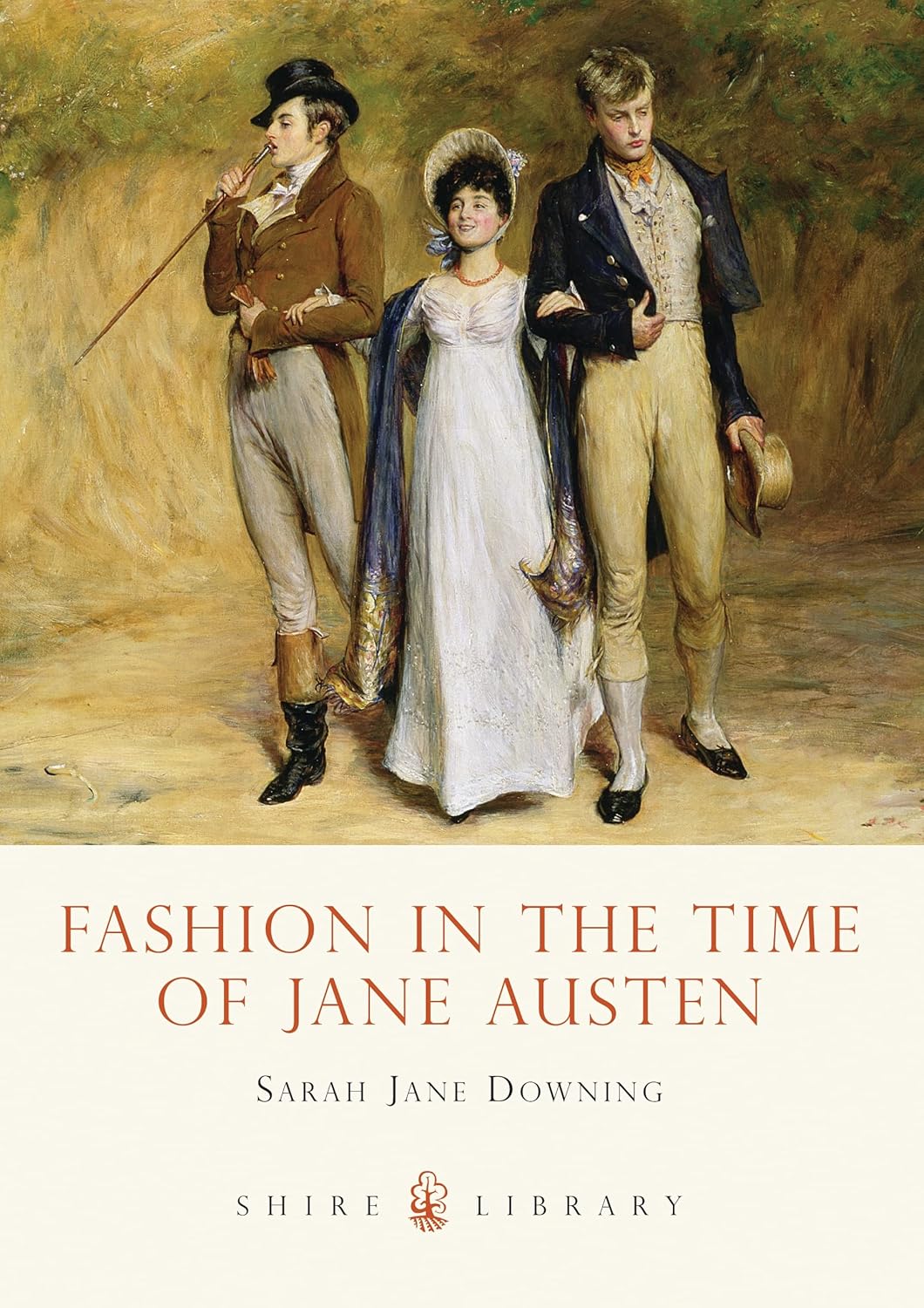
More Regency fashion books

More Regency and some Romantic Era fashion books I found on Amazon for those interested:


Vol. 1
Vol. 2
Vol. 3
Vol. 4
Or you can get all 4 together on e-book:
Prints and commentary 
Prints only 
By Susana Ellis


Tuesday, June 24, 2025

Georgian bookzines

More bookzines I own, this time covering the Georgian era: 1714-1837... definitely check them out if you're interested and able!


Thursday, April 17, 2025

Victorian bookzines

Some bookzines for those interested and are able to get them via magazinesdirect.com or magazine resellers:


Tuesday, June 4, 2024

"The Beau Monde"

Noted historian Hannah Craig (who, at last check, is involved with Bridgerton) has released a book that's not to be missed for those interested:

Caricatured for extravagance, vanity, glamorous celebrity and, all too often, embroiled in scandal and gossip, 18th-century London's fashionable society had a well-deserved reputation for frivolity. But to be fashionable in 1700s London meant more than simply being well dressed. Fashion denoted membership of a new type of society--the beau monde, a world where status was no longer determined by coronets and country seats alone but by the more nebulous qualification of metropolitan 'fashion'. Conspicuous consumption and display were crucial; the right address, the right dinner guests, the right possessions, the right jewels, the right seat at the opera.
The Beau Monde leads us on a tour of this exciting new world, from court and parliament to London's parks, pleasure grounds, and private homes. From brash displays of diamond jewellery to the subtle complexities of political intrigue, we see how membership of the new elite was won, maintained--and sometimes lost. On the way, we meet a rich and colourful cast of characters, from the newly ennobled peer learning the ropes and the imposter trying to gain entry by means of clever fakery, to the exile banned for sexual indiscretion.
Above all, as the story unfolds, we learn that being a Fashionable was about far more than simply being 'modish'. By the end of the century, it had become nothing less than the key to power and exclusivity in a changed world.

Tuesday, May 28, 2024

Catherine Curzon books

I recently discovered these books that may be worth looking into should you be interested:

For over one hundred years of turmoil, upheaval, and scandal, Great Britain was a Georgian land. From the day the German-speaking George I stepped off the boat from Hanover to the night that George IV, bloated and diseased, breathed his last at Windsor, the four kings had presided over a changing nation.
Kings of Georgian Britain offers a fresh perspective on the lives of the four Georges and the events that shaped their characters and reigns. From love affairs to family feuds, political wrangling, and beyond, it is a chance to peer behind the pomp and follow these iconic figures from cradle to grave. After all, being a king isn’t always about grand parties and jaw-dropping jewels, and sometimes following in a father’s footsteps can be the hardest job around.
Take a step back in time and meet the wives, mistresses, friends, and foes of these remarkable kings who shaped the nation, and find out what really went on behind closed palace doors. Whether dodging assassins, marrying for money, digging up their ancestors, or sparking domestic disputes that echoed down the generations, the kings of Georgian Britain were never short on drama.

Once upon a time there were four kings called George who, thanks to a quirk of fate, ruled Great Britain for over a century. Hailing from Germany, these occasionally mad, bad, and infamous sovereigns presided over a land in turmoil. Yet what of the remarkable women who were crowned alongside them?
From the forgotten princess locked in a tower to an illustrious regent, a devoted consort, and a notorious party girl, the queens of Georgian Britain lived lives of scandal, romance, and turbulent drama. Whether dipping into politics or carousing on the shores of Italy, Caroline of Ansbach, Charlotte of Mecklenburg-Strelitz, and Caroline of Brunswick refused to fade into the background.
Queens of Georgian Britain offers a chance to step back in time and meet the women who ruled alongside the Georgian monarchs, not forgetting Sophia Dorothea of Celle, the passionate princess who never made it as far as the throne. From lonely childhoods to glittering palaces, via family feuds, smallpox, strapping soldiers, and plenty of scheming, these are the queens who shaped an era.

When Sophia Dorothea of Celle married her first cousin, the future King George I, she was an unhappy bride. Filled with dreams of romance and privilege, she hated the groom she called “pig snout” and wept at news of her engagement. In the austere court of Hanover, the vibrant young princess found herself ignored and unwanted. Bewildered by dusty protocol and regarded as a necessary evil by her husband, Sophia Dorothea grew lonely as he gallivanted with his mistress under her nose. When Sophia Dorothea plunged headlong into a passionate and dangerous affair with Count Phillip Christoph von Königsmarck, the stage was set for disaster. This dashing soldier was as celebrated for his looks as his bravery, and when he and Sophia Dorothea fell in love, they were dicing with death. Watched by a scheming and manipulative countess who had ambitions of her own, it was only a matter of time before scandal gripped the House of Hanover and tore the marriage of the heir to the British throne and his unhappy wife apart. Divorced and disgraced, Sophia Dorothea was locked away in a gilded cage for 30 years, whilst her lover faced an even darker fate.

When George I arrived in England he found a kingdom in turmoil. Mistrustful of the new monarch from Hanover, his subjects met his coronation with riots. At George’s side was his mistress, Melusine von der Schulenberg, whilst his ex-wife languished in prison. Known as the Maypole thanks to her eye-catching figure, Melusine was the king’s confidante for decades. She was a mother to his children and a queen without a crown. George II never forgave his father for tearing him from his mother's arms and he was determined to marry for love, not duty. Though his wife, Caroline of Ansbach, proved to be a politically gifted queen, George II turned to another for affection. She was Henrietta Howard, the impoverished Countess of Suffolk, and she was desperate to escape her brutish husband. As the years passed, the royal affair became a powerplay between king and queen and the woman who was mistress to one and servant to another. Melusine and Henrietta's privileged position made them the envy of every courtier. It also made them a target of jealousy, plotting and ambition. In the tumultuous Georgian court, the bedroom and the throne room weren't so far apart.

Known to millions as the imperious matriarch of Bridgerton’s court, Charlotte of Mecklenburg-Strelitz was still a teenager when she was chosen to be the bride of King George III. Shy, innocent, and sheltered, the orphaned princess and her youthful groom carried the hopes of a nation on their shoulders. The placid and unassuming young couple symbolised a new beginning, but soon those hopes began to sour. Charlotte and George’s marriage lasted for nearly 60 years and produced more than a dozen children, but it was beset by unrest at home, war in the colonies, and the king’s encroaching madness. As the royal couple battled against their critics, their political opponents, and sometimes even their own family, Charlotte learned what it really meant to be queen. Locked in a bitter struggle with her eldest son for the king’s future and with her daughters for their freedom, the timid young girl grew into an insular and domineering woman that few dared to cross. Shouldering the burden of family disputes, ambitious courtiers, and the care of the man she adored, Charlotte of Mecklenburg-Strelitz presided over one of the most tumultuous eras that the monarchy has ever seen. As tragic as it was glittering, this is the story of her extraordinary life.

For nearly sixty years, King George III reigned over a tumultuous kingdom. His health and realm were in turmoil, while family life held challenges of its own. From the corpulent Prinny and the Grand Old Duke of York, to a king who battled the Lords and the disciplinarian Duke of Kent, this is the story of George III’s elder sons.
Born during half a decade of upheaval, George, Frederick, William, and Edward defined an era. Their scandals intrigued the nation and their efforts to build lives outside their parents’ shadow led them down diverse paths. Whether devoting themselves to the military or to pleasure, every moment was captured in the full glare of the spotlight.
The sons of George III were prepared from infancy to take their place on the world’s stage, but as the king’s health failed and the country lurched from one drama to the next, they found that duty was easier said than done. With scandalous romances, illegal marriages, rumors of corruption and even the odd kidnapping plot, their lives were luridly dramatic, and never, ever dull.

In the dying years of the 18th century, the corridors of Windsor echoed to the footsteps of six princesses. They were Charlotte, Augusta, Elizabeth, Mary, Sophia, and Amelia, the daughters of King George III and Queen Charlotte of Mecklenburg-Strelitz. Though more than fifteen years divided the births of the eldest sister from the youngest, these princesses all shared a longing for escape. Faced with their father’s illness and their mother’s dominance, for all but one a life away from the seclusion of the royal household seemed like an unobtainable dream.
The six daughters of George III were raised to be young ladies and each in her time was one of the most eligible women in the world. Tutored in the arts of royal womanhood, they were trained from infancy in the skills vital to a regal wife but as the king’s illness ravaged him, husbands and opportunities slipped away.
Yet even in isolation, the lives of the princesses were filled with incident. From secret romances to dashing equerries, rumors of pregnancy, clandestine marriage and even a run-in with Napoleon, each princess was the leading lady in her own story, whether tragic or inspirational. In The Daughters of George III, take a wander through the hallways of the royal palaces, where the king’s endless ravings echo deep into the night and his daughters strive to be recognized not just as princesses, but as women too.

In Georgian England, few men were more eligible than the Prince of Wales. The heir to George III’s throne would seem to be an excellent catch. Though the two women who married him might beg to differ.
Maria Fitzherbert was a twice-widowed Roman Catholic with a natural aversion to trouble. When she married the prince in a secret ceremony, she opened the door on three decades of heartbreak. Cast aside by her husband one minute, pursued by him tirelessly the next, Maria’s clandestine marriage was anything but blissful. It was also the worst kept secret in England.
Caroline of Brunswick was George’s official bride. Little did she know that her husband was marrying for money. When she arrived for the ceremony, she found him so drunk that he couldn’t even walk to the altar. Caroline might not have her husband’s love, but the public adored her. In a world where radicalism was stirring, it was a recipe for disaster.
In The Wives of George IV, Maria and Caroline navigate the choppy waters of marriage to the capricious, womanizing king-in-waiting. With a queen on trial for adultery and the succession itself in the balance, Britain had never seen scandal like it.

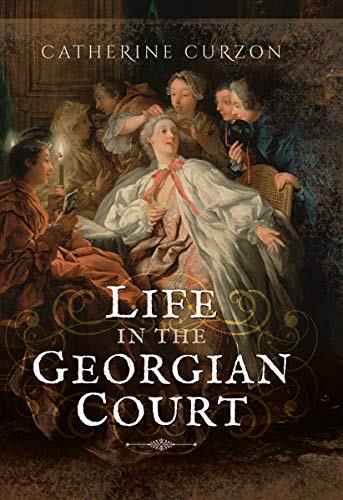
As the glittering Hanoverian court gives birth to the British Georgian era, a golden age of royalty dawns in Europe. Houses rise and fall, births, marriages and scandals change the course of history. Meanwhile, in France, Revolution stalks the land. Life in the Georgian Court pulls back the curtain on the opulent court of the doomed Bourbons, the absolutist powerhouse of Romanov Russia, and the epoch-defining royal family whose kings gave their name to the era, the House of Hanover.
Beneath the powdered wigs and robes of state were real people living lives of romance, tragedy, intrigue and eccentricity. Historian Catherine Curzon reveals the private lives of these very public figures, vividly recounting the arranged marriages that turned to love or hate and the scandals that rocked polite society. Here the former wife of a king spends three decades in lonely captivity, King George IV makes scandalous eyes at the toast of the London stage, and Marie Antoinette begins her final journey through Paris as her son sits alone in a forgotten prison cell.
Life in the Georgian Court is a privileged peek into the glamorous, tragic and iconic courts of the Georgian world, where even a king could take nothing for granted.

From Windsor to Weymouth, the shadow of scandal was never too far from the walls of the House of Hanover. Did a fearsome duke really commit murder or a royal mistress sell commissions to the highest bidders, and what was the truth behind George III's supposed secret marriage to a pretty Quaker?With everything from illegitimate children to illegal marriages, dead valets and equerries sneaking about the palace by candlelight, these eyebrow-raising tales from the reign of George III prove that the highest of births is no guarantee of good behavior. Prepare to meet some shocking ladies, some shameless gentlemen and some politicians who really should know better. So tighten your stays, hoist up your breeches and prepare for a gallop through some of the most shocking royal scandals from the court of George III's court. You'll never look at a king in the same way again…

As millions of viewers across the globe thrill to the assembly room exploits of the Bridgerton family and wait with bated breath for Lady Whistledown’s latest dispatch from Almack’s, scandal has never been so delicious. In a world where appearances were everything and gossip was currency, everyone had their price.
From a divorce case that hinged on a public demonstration of masturbation to the irresistible exploits of the New Female Coterie, via the Prince Regent’s dropped drawers and Lady Hamilton’s diaphanous unmentionables, The Real Bridgerton pulls back the sheets on the eighteenth century’s most outrageous scandals. Within these pages Lord Byron meets his match, the richest commoner in England falls for a swindler with a heart of stone, and forbidden love between half-siblings leaves a wife and her children reeling.
Behind the headlines and the breathless whispers in Regency ballrooms were real people living real lives in a tumultuous, unforgiving era. The fall from the very pinnacle of society to the gutter could be as quick as it was brutal. If you thought that Bridgerton was as shocking as the Georgians got, it’s time to think again.

In Inside the World of Bridgerton, author and Regency period expert Catherine Curzon explores the historical inspirations behind the hit series, and illuminates the fascinating details of real life in Regency high society.
Examining a range of key topics, this
 revealing guide covers everything from the class structure of the era and the crucial role played by marriage to the stunning fashion, culture and social events of the time that have enchanted audiences and history fanatics for centuries. With further chapters dedicated to sexracethe media and more, this is a window into the real history that has helped make Bridgerton into such a global phenomenon.
Offering insightful advice on what to - and what not to – wear, how to see and be seen, the reality of ‘coming out’ into the public arena, and decoding the real-life 
scandal sheets on which the beloved TV show is largely based, Inside the World of Bridgerton highlights how the real ladies and gentlemen of Regency England lived and loved.