Tuesday, April 21, 2026
History Tea Time on Louis XV
Tuesday, January 7, 2025
Napoleon's siblings
Thursday, January 2, 2025
Queen Victoria's descendants
Tuesday, December 31, 2024
George III episodes
Wednesday, August 29, 2018
Five Princesses
Monday, January 30, 2012
Catherine the Great
Born April 21, 1729 as Princess Sophie Augusta Federicka of Anhalt-Zerbst, she was chosen by Empress Elizabeth of Russia to marry her cousin Peter (who was Elizabeth's chosen heir) and rule the massive country by his side. After both converted to Greek Orthodoxy, Sophie became Catherine, and the teens were wed on August 21, 1745, but the marriage was an unhappy one: Peter repulsed her and was dull, and the Empress made sure she knew everything Catherine did and said...nothing which seemed to please the Empress. Though miserable, Catherine was able to help make her way through by remembering that what she really wanted was not the marriage itself, but the throne and its power. When Elizabeth died in 1761, Peter became Czar Peter III, and finally, Catherine became the Czarina. They had two children, Paul and Anna, though Anna died in infancy. In 1762, with help, she staged a coup, and some months later, Peter was dead...many thought Catherine behind it. Though probably best known as the Queen with many lovers, she was a wise and compitent leader, ruling until her death on November 7, 1796. Here's a list of some books I found on one of history's best known women:
Portrayed both as a political genius who restored to Russia the glory it had known in the days of Peter the Great and as a despotic foreign adventuress who usurped the Russian throne, murdered her rivals, and tyrannized her subjects, she was, by all accounts, an extraordinary woman. Catherine the Great, the first popular biography of the empress based on contemporary scholarship, provides a vivid portrait of Catherine as a mother, a lover, and, above all, an extremely savvy ruler. Concentrating on her long reign (1762-96), John Alexander examines all aspects of Catherine's life and career: the brilliant political strategies by which she won the acceptance of a nationalistic elite; her expansive foreign policy; the domestic reforms with which she revamped the Russian military, political structure, and economy; and, of course, her infamous love life.
Beginning with an account of the dramatic palace revolt by which Catherine unseated her husband and a background chapter describing the circumstances of her early childhood and marriage, Alexander then proceeds chronologically through the thirty-four years of her reign. Presenting Catherine in more human terms than previous biographers have, Alexander includes numerous quotations from her reminiscences and notes. We learn, for instance, not only the names and number of her lovers, but her understanding of what many considered a shocking licentiousness. "The trouble is," she wrote, "that my heart would not willingly remain one hour without love."
The result of twenty years' research by one of America's leading narrative historians of modern Russia, this truly impressive work offers a much-needed, balanced reappraisal of one of history's most scandal-ridden figures.
Intimate and revealing, Catherine the Great examines the lifelong friendships that sustained the empress throughout her personal life and places her within the context of the royal court: its politics, its flourishing literature and the very culture that became central to her exercise of absolute power.
From the moment the fourteen-year-old Princess Sophia of Anhalt-Zerbst agreed to marry the heir to the Russian throne, she was mired in a quicksand of intrigue. Precociously intelligent, self-confident, and attractive but with a stubborn, wayward streak, Sophia withstood a degree of emotional battering that would have broken a weaker spirit until at last she emerged, triumphant over her many enemies, as Empress Catherine II of Russia.
Her achievements as empress were prodigious. She brought vast new lands under Russian rule. She raised the prestige of Russia in Europe. She began the process of imposing legal and political order on the chaos she inherited from her predecessors. Yet few historical figures have been so enthusiastically vilified as Catherine the Great. Whispers that she had ordered her husband's murder grew to murmurs that she was an immoral woman and finally to shouts that she was a depraved, lust-crazed nymphomaniac. With deft mastery of historical narrative and an unsurpassed ability to make the past live again, Carolly Erickson uncovers the real woman behind the tarnished image―an indomitable, feisty, often visionary ruler who, in an age of caveats and constraints, blithely went her own way.
Great Catherine reveals the complexities of this great ruler's nature, her craving for love, her insecurities, the inevitable sorrows and disappointments of a strong empress who dared not share her power with any man yet longed to be led and guided by a loving consort. Great Catherine is a fresh portrait of an infamous historical figure, one that reveals how Catherine's flawed triumph guaranteed her posthumous fame and enhanced the might and renown of Russia for generations to come.
Unhappily married to the Grand Duke Peter, a man who preferred to play with his toy soldiers in the bedroom, they failed to produce an heir, and Catherine turned her attentions to a certain Sergey Saltykov who fathered the future Tsar Paul I. Six months into the reign of Peter III, Catherine, supported by the Imperial Guard, staged a successful coup against her husband and became Empress. It was her ambition to transform a vast but semi-barbaric country with the cultural and political reforms of Enlightenment Europe.
In this fascinating biography, Virginia Rounding reveals an extraordinary woman in all her complexity.
This is history as it is rarely written today—elegant, witty, dramatic, and with an intimate knowledge of its characters. And what better subject for a biography than one of history's most powerful women, the German-born Russian empress whose adopted language and culture were French, and whose most loyal correspondents were Voltaire and Diderot? Troyat details the various lives of Catherine II: the ambitious child, the acquiescent yet firm grand duchess, the forceful politician and patron of the arts, the belligerent war maker, and the doting grandparent.
Fluent in French, Russian, and German, Catherine published political theory, journalism, comedies, operas, and history, while writing thousands of letters as she corresponded with Voltaire and other public figures. The Memoirs of Catherine the Great provides an unparalleled window into eighteenth-century Russia and the mind of an absolute ruler.
With insight, humor, and candor, Catherine presents her eyewitness account of history, from her whirlwind entry into the Russian court in 1744 at age fourteen as the intended bride of Empress Elizabeth I’s nephew, the eccentric drunkard and future Peter III, to her unhappy marriage; from her two children, several miscarriages, and her and Peter’s numerous affairs to the political maneuvering that enabled Catherine to seize the throne from him in 1762. Catherine’s eye for telling details makes for compelling reading as she describes the dramatic fall and rise of her political fortunes.
This definitive new translation from the French is scrupulously faithful to her words and is the first for which translators have consulted original manuscripts written in Catherine’s own hand. It is an indispensable work for anyone interested in Catherine the Great, Russian history, or the eighteenth century.
Wednesday, December 7, 2011
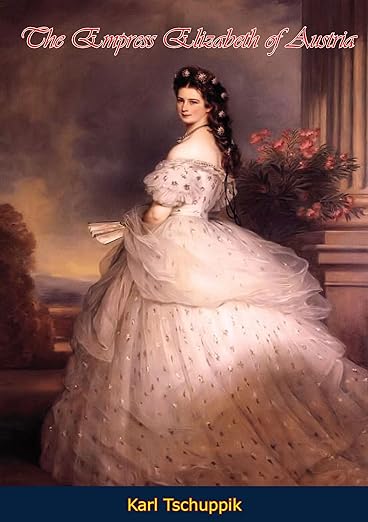
Empress Elisabeth of Austria
She was known for her beauty, style and horsemanship...but was also dubbed the lonely or reluctant empress. Born on Christmas Eve, 1837, Elizabeth showed her love of freedom and distaste of the iron rule of royal court life at a young age. Like her father, Duke Maximilian, she was a free spirit and enjoyed writing poetry and the simple life her family lead at their home Possenhofen. However, fate intervened when she, her mother, and older sister went to visit her aunt and her son, the Emperor Franz Joseph. The original plan was to marry her sister to the Emperor, but he fell for Elisabeth instead, and the two were married in 1854. Though the Emperor loved his wife, her hatred of the confinements of both marriage, her duties as Empress, and the domination of her mother in law strained the marriage, and she spent as much time as she could away from Austria. Her only son, (and the heir) Crown Prince Rudolph, committed suicide with his mistress in 1889, and on September 10, 1898, the Empress was stabbed to death by an aspiring anarchist in Geneva, Switzerland. Here's some books I found on this beautiful, but tragic, royal woman:
Meanwhile, in Austria, the emperor is recovering from an assassination attempt that left him wounded and scared. In a bid to keep the peace, Franz has recommitted himself to his imperial duties—and promised to romance the pliant Helene of Bavaria at his upcoming birthday celebration. How better to unite the empire than with the announcement of a new empress?
But when Sisi and Franz meet unexpectedly in the palace gardens, away from the prying eyes and relentless critique of the court, their connection cannot be denied. And as their illicit conversations turn into something more, they must soon choose between the expectations of their families and standing up for what they truly believe in...
First published in 1988, Brigitte Hamann's definitive biography tells Elisabeth's story from her birth into Bavarian nobility to her assassination at the hands of an Italian anarchist. In her lifetime she was idolised solely for her grace and beauty; but Hamann shows us a stronger character, bitter at her marriage, seeking independence, and struggling against the powerful influence of her mother-in-law, the Archduchess Sophie.
A century has transformed this bloody scene into romantic tragedy: star-crossed lovers who preferred death together than to be parted by a cold, unfeeling Viennese Court. But Mayerling is also the story of family secrets: incestuous relationships and mental instability; blackmail, venereal disease, and political treason; and a disillusioned, morphine-addicted Crown Prince and a naïve schoolgirl caught up in a dangerous and deadly waltz inside a decaying empire. What happened in that locked room remains one of history’s most evocative mysteries: What led Rudolf and mistress to this desperate act? Was it really a suicide pact? Or did something far more disturbing take place at that remote hunting lodge and result in murder?
Drawing interviews with members of the Habsburg family and archival sources in Vienna, Greg King and Penny Wilson reconstruct this historical mystery, laying out evidence and information long ignored that conclusively refutes the romantic myth and the conspiracy stories.
Elisabeth of Austria (1837-1898) was the wife of Emperor Franz Joseph I, and thus Empress of Austria, Queen of Hungary and Queen consort of Croatia and Bohemia.
Born into Bavarian royalty, Elisabeth (“Sisi”) enjoyed an informal upbringing before marrying Franz Joseph at the age of sixteen. The marriage thrust her into the much more formal Habsburg court life, for which she was ill-prepared and which she found uncongenial. Early in the marriage she was at odds with her mother-in-law, Princess Sophie, who took over the rearing of Elisabeth’s daughters, one of whom, Sophie, died in infancy.
The birth of a male heir, Rudolf, improved her standing at court considerably, but her health suffered under the strain, and she would often visit Hungary for its more relaxed environment. She came to develop a deep kinship with Hungary, and helped to bring about the dual monarchy of Austria-Hungary in 1867.
The death of her only son Rudolf, and his mistress Mary Vetsera, in a murder-suicide tragedy at his hunting lodge at Mayerling in 1889 was a blow from which Elisabeth never recovered. She withdrew from court duties and travelled widely, unaccompanied by her family. She was obsessively concerned with maintaining her youthful figure and beauty, demanding to be sewn into her leather corsets and spending two or three hours a day on her coiffure.
While travelling in Geneva in 1898, she was stabbed to death by an Italian anarchist named Luigi Lucheni who selected her because he had missed his chance to assassinate Prince Philippe, Duke of Orléans, and wanted to kill the next member of royalty that he saw.
Elisabeth was the longest serving Empress-consort of Austria, at 44 years.
As always, feel free to share any thoughts below, and enjoy any of those books you decide to get!
Tuesday, November 15, 2011
Josephine Bonaparte
Born Rose Tascher on the island of Martinique on June 23, 1763, the future Empress of France was a widow with two children when she met an aspiring and ambitious general named Napoleon who married her in 1796 and changed her name to Josephine. She was also six years older than him. According to legend, as a girl she was told in a prophecy that she would "cross the great water" and become queen. Whether or not her marriage was this coming true is debatable. Though the two loved each other, his family did not, and tensions between them and the couple, Napoleon's many military campaigns, and Josephine's inability to bear an heir all contributed to their divorce in 1809. On May 29, 1814, Josephine died after catching a chill while out for a walk a few weeks earlier. A fascinating life to be sure. Here's a rundown of the novels on her I have on her:
- Napoleon and Josephine: A Love Story by Theo Aronson
- Josephine: Napoleon's Incomparable Empress by Eleanor P. Delorme
- Josephine: A Life of the Empress by Carolly Erickson
- The Rose of Martinique: A Life of Napoleon's Josephine by Andrea Stuart